


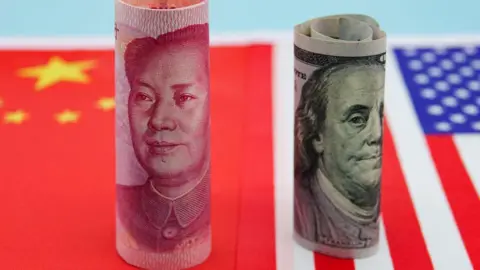
There is an unusual stillness at the heart of United States monetary influence.
The US Treasury has ceased operations like much of the federal government.
Most staff are on temporary leave as global economic leaders and bankers jet in for the International Monetary Fund yearly gatherings in close proximity, postponed aircraft processed by a handful of volunteer aviation directors.
Definite Statement emerging from Washington
There is, however, an unambiguous communication the Trump administration are particularly eager to communicate, not primarily for its domestic audience but for the bewildered world outside.
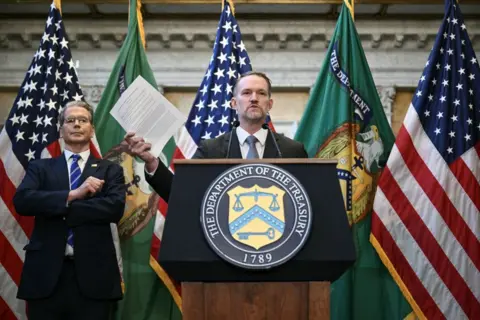
And they delivered it throughout the previous week to a limited group of attendees ushered into the financial department and what is said to be the most impressive chamber in the US capital, the ornate and stone-clad Treasury Hall, which welcomed the first gathering for reconstruction-era head of state, Ulysses Grant.
Understand clearly, said Financial Chief the financial official accompanied by Trade Ambassador Jamieson Greer, as they initiated the recent attack in the current 2025 global trade war. It constitutes China opposing international partners.
This simple message links multiple unusual financial trends moving across the globe currently.
Global Economic Trends
These encompass China's fresh commerce limitations on critical minerals, fears of a technology bubble collapsing, the duty confusion and also the creation of a romantic digital companion by the technology firm.
The global community consistently appears to move slightly in its orientation during the fortnight each year that senior banking officials and economic leaders gather in Washington DC for their meetings at the global financial institution.
It's unusual that the organizing country is the main source of turmoil. Normally it might be an emerging economy, or perhaps the eurozone in the previous decade and memorably the UK in 2022.
The determinations and ambiguity arising from US trade policy, confusing financial systems and choices over monetary policy, loom large.
Beijing's Trade Limitations
The inescapable message being sent by the leading US trade negotiators as they communicated with a select few of journalists in the Treasury's Cash Room was that China in recent days launched maybe its strongest tool yet by dramatically increasing restrictions on the trade of critical materials.
These are critical to the manufacturing of sophisticated items ranging from electric vehicles to armament systems.
The financial official called this decision a "China grip" on the international community.
Chinese "comprehensive extension" of commerce limitations on critical materials and tools, as well as EV power technology, industrial diamonds and extremely durable substances is "a demonstration in commercial force on each state in the world", declared Greer.
International Commerce Dynamics
This charge is being made as his superior, President Donald Trump seeks to reshape international commerce connections by using tariffs to remove US trade deficits.
He could have created what is the toughest tariffs system the globe has experienced in modern history but the disruption it has caused has been surprisingly muted to date.
The greatest financial power globally is presently shielded by a significant tariff wall but it hasn't yet notice the effects, partially because of a financial growth built on fairly frothy technology assessments.
Financial Protection
Businesses exporting to the US have swallowed the price of levies, which are effectively border duties, in their earnings. But is that merely for currently?
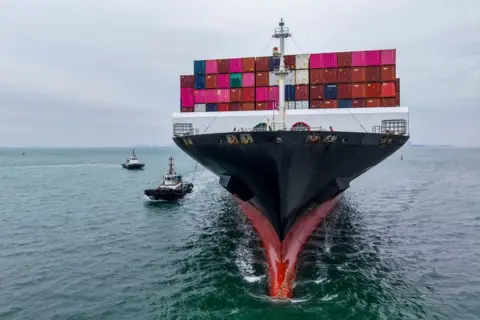
The protection of duties that America has created protecting its market has resulted in increased commerce, for instance, from Chinese companies to European nations and the continent.
America itself has been shielded, for now, from the profound ambiguities, higher prices and domestic living standards effects of the duties and the 10% decline in the value of US currency.
Partial protection has resulted from thriving artificial intelligence industry share valuations, creating a substantial wealth effect in specific families across the US, calculated by the banking group economists as valued at $180 billion annually.
AI Valuation Fears
The thin line between growth and inflation is impossible to determine. At times, it becomes apparent.
I positioned myself outside the Nasdaq in New York's Times Square, where the high tech market which epitomizes American corporate digital leadership publicises recent stock launches to the international community.
Among the many of investment groups which collects actual money to invest in crypto, joyously "initiated trading", even though their stock value {already having


